
How to Export Hass Avocado to Europe Successfully
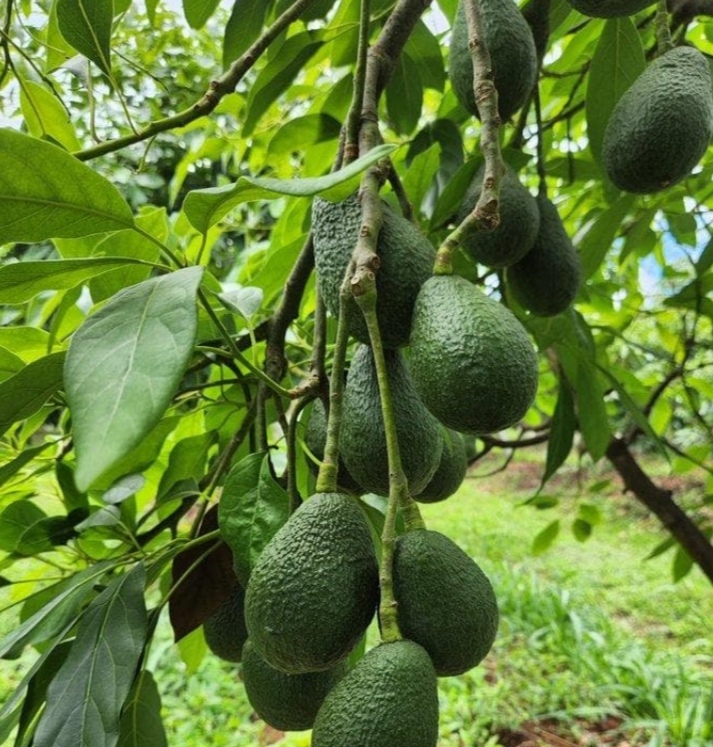
How to Export Hass Avocado to Europe Successfully
Introduction
The global avocado trade has expanded rapidly over the past decade, turning avocados into a high-value international commodity. Yet every avocado that reaches an EU supermarket in good condition is the result of a carefully managed process involving cultivation, harvesting, sorting, packaging, transport, ripening, and strategic market positioning. Exporting high-quality avocado products is therefore not only an agricultural activity but also a quality management system that depends on precision at every stage.
This blog is particularly for exporters, importers, and lovers of avocados. The theory used is Supply Chain Quality Management (SCQM). SCQM explains that product quality is created and protected across the entire supply chain, not just at the final point of sale. For avocados, this means quality depends on coordinated decisions from the orchard to the retail shelf. Here is a step – by-step process of the journey of avocados from farm to shelves in the supermarket in Europe.
-
Quality Begins in the Orchard
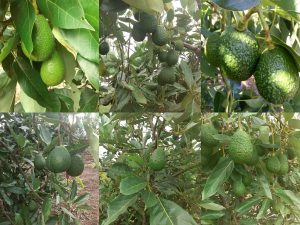
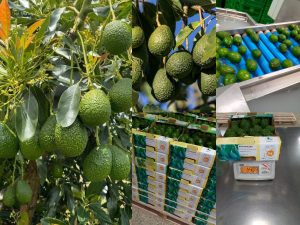
High quality avocado exports begin long before harvest. Farmers must manage soil health, irrigation, tree nutrition, and pest control to produce fruit with the right size, oil content, and texture. Research shows that fruit maturity indicators, especially dry matter content, are closely linked to eating quality and ripening performance.
This stage is very important because quality cannot be improved after harvest if the fruit was produced poorly. For exporters, the orchard is the first quality-control point. For consumers, it explains why avocados from well-managed farms often taste better and ripen more consistently.
-
Selective Harvesting Protects Value
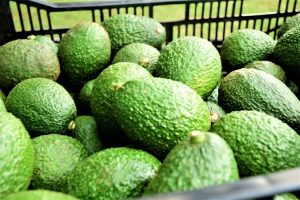
Harvesting avocados for export requires care and timing. Workers usually pick fruit by hand to avoid bruising, skin damage, and stem-end injury. The fruit must be harvested at the correct maturity stage because picking too early may lead to poor ripening, while picking too late may reduce shelf life during shipping.
This stage reflects a basic principle of SCQM: prevent defects at the source rather than correcting them later. In practical terms, trained harvest teams, maturity testing, and careful handling all help preserve the value of the crop before it enters the supply chain.
-
Sorting and Grading Create Consistency
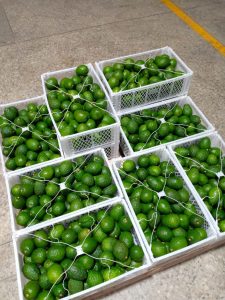
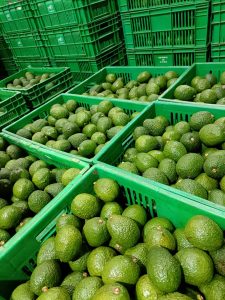
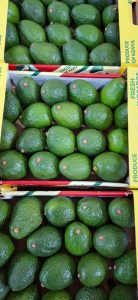
After harvest, the fruit moves to the packhouse for sorting and grading. Avocados are classified by size, weight, appearance, and external defects. Only fruit that meets export specifications is selected for premium markets. This stage is crucial because exporters must deliver consistent quality to buyers. Uniform fruit is easier to transport, easier to ripen, and more appealing to retailers. Grading also helps remove defective fruit early, so it does not affect the quality of the rest of the shipment.
-
Packaging and Pre-Cooling Preserve Freshness
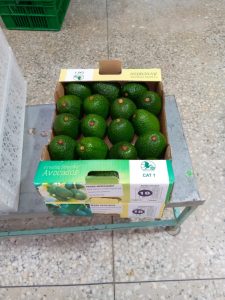
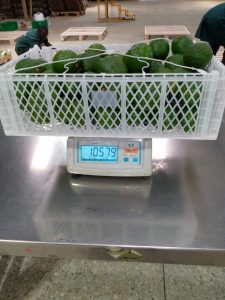
Once sorted, avocados are usually pre-cooled and packed in ventilated cartons or crates. Packaging serves several functions at once: it protects fruit from mechanical damage, allows airflow, and supports traceability. Labels often include information such as origin, batch number, and harvest date. Pre-cooling slows down ripening and reduces deterioration during transport. This is a critical step because avocados continue to respire after harvest. In export systems, packaging is not just about presentation; it is part of the quality-preservation process.
-
The Cold Chain Maintains Quality
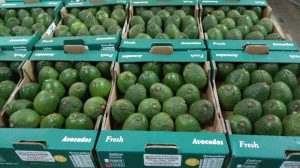
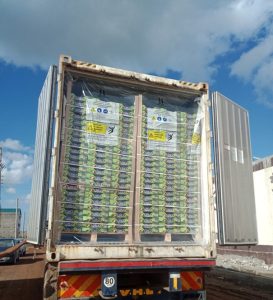
The cold chain is one of the most important parts of avocado export logistics. Avocados are commonly stored and transported under controlled temperatures to slow ripening and prevent quality loss. Even small temperature fluctuations can shorten shelf life or damage the fruit. Refrigerated containers (Reefer) are widely used for sea freight, which is the most common shipping method for avocado exports especially in bulk. Temperature, humidity, and airflow must be monitored throughout the journey. This stage shows why export quality is a logistics issue as much as an agricultural one.
-
Standards and Certification Support Market Access
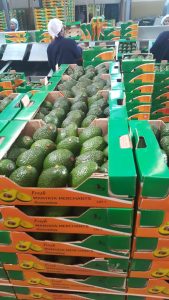
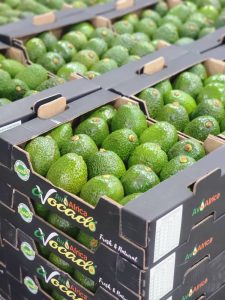
Exporting to premium markets, especially the EU, requires compliance with strict standards. These may include GlobalG.A.P., organic certification, phytosanitary requirements, residue testing, and traceability records. Buyers increasingly want evidence that the fruit was produced safely and in a responsible way.
From an academic perspective, standards function as trust-building mechanisms. They reassure importers and consumers that the product meets agreed levels of safety, quality, and sustainability. For exporters, certification is not simply paperwork; it is a market-entry requirement and a competitive advantage.

-
Ripening at Destination Completes the Chain
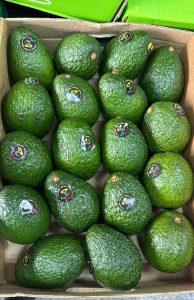
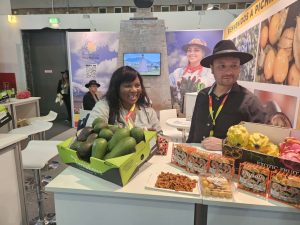
After arrival, many avocados are sent to ripening facilities before being delivered to retailers. Controlled exposure to ethylene gas allows the fruit to ripen evenly and predictably. This is especially important because consumers expect avocados to be ready to eat or to ripen within a short and predictable period. This stage demonstrates the value of coordination across the supply chain. If the fruit was harvested too early, packed poorly, or exposed to poor temperatures during transport, destination ripening cannot fully restore quality. This is what is explained in the SCQM theory about avocado exports. That every stage depends on the one before it.
-
Branding Turns Quality Into Market Value
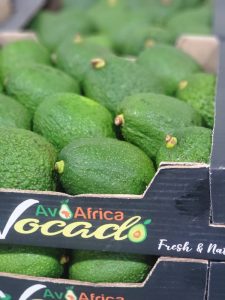
High-quality avocados are not sold on appearance alone. Strong branding, reliable supply, sustainability claims, and consistent quality all shape how buyers perceive the product. Exporters who can deliver uniform fruit and dependable logistics often build stronger relationships with importers and retailers. Branding is even more important in a crowded market. It helps exporters differentiate their product and communicate value beyond the fruit itself. For the general public, branding also influences which avocados appear more trustworthy or premium on supermarket shelves.
Conclusion
Exporting high-quality avocados is a sophisticated process that combines agriculture, quality management, logistics, and international trade. Because exporting avocados involves many complex steps and the product is highly perishable, it is most often handled by experienced exporters. The best theory to explain this process is Supply Chain Quality Management because it shows that quality is not created in one place; it is built through coordinated control across the entire supply chain.
For exporters, the lesson is clear: successful avocado trade depends on disciplined production, careful harvesting, strong packhouse systems, cold-chain integrity, and compliance with standards. For the general public and lovers of avocados, the lesson is equally important: the avocado in the supermarket represents a long chain of technical decisions designed to protect freshness, taste, and consistency. And for importers, this explains what it takes when offloading your avocado from the port.
Join us and be part of the solution!
– Patience Chindong
References
Bill, M., Sivakumar, D., & Korsten, L. (2014). Avocado fruit quality management during the postharvest supply chain. Food Reviews International. https://www.tandfonline.com/doi/full/10.1080/87559129.2014.907304
Chen, J., et al. (2017). Cold shock treatment extends shelf life of naturally ripened or ethylene-ripened avocado fruits. PLoS One. https://pmc.ncbi.nlm.nih.gov/articles/PMC5734781/
Frontiers in Plant Science. (2022). Evaluation of postharvest maturity indices of commercial avocado varieties. https://www.frontiersin.org/journals/plant-science/articles/10.3389/fpls.2022.895964/full
Frontiers in Sustainable Food Systems. (2025). Characterizing avocado production systems for Ugandan exports. https://www.frontiersin.org/journals/sustainable-food-systems/articles/10.3389/fsufs.2025.1500012/full