
Agribusiness Growth Finance: Why Financial Intermediation Matters
Agribusiness Growth Finance: Why Financial Intermediation Matters
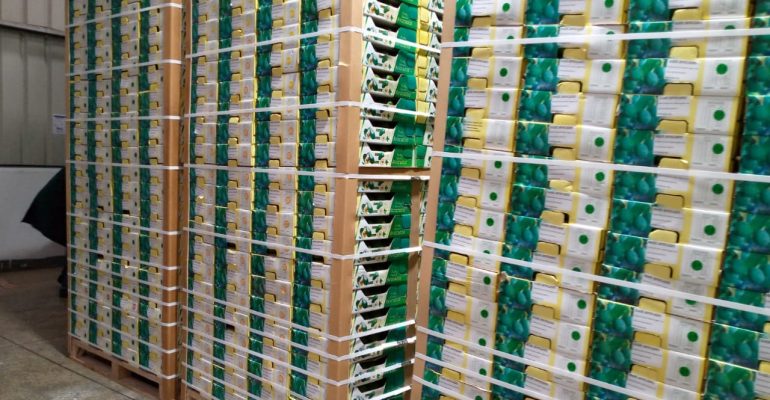
For many African agribusinesses, the first export shipment is the hardest milestone to achieve. It requires market research, compliance, quality control, packaging, logistics, and the trust of international buyers. Once a business has shipped its first container, it has already proven market readiness. The next challenge is growth.
This is where financial intermediation theory helps explain agribusiness growth finance. The theory shows how financial institutions, investors, and trade finance partners mobilise capital and allocate it to productive businesses that can use it to expand. In agribusiness, that means moving finance into working capital, processing capacity, warehousing, certification, and export logistics.
From One Container to Ten
Scaling from one container to ten requires more than ambition. It requires a financial system that understands seasonality, supply chain complexity, foreign buyer contracts, and the long cash cycles of international trade. Research shows that access to finance supports agricultural performance and productivity by enabling investment and expansion.
An exporter who has already completed a first shipment has reduced some of the uncertainty that financiers usually worry about. That makes the business a stronger candidate for growth capital, especially when financing is structured around actual export demand and operational capacity . In this way, finance is not just money; it is a mechanism for unlocking scale.

EuroAfri Link’s Role
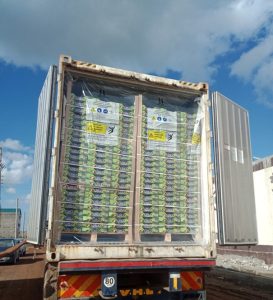
At EuroAfri Link, support does not end once sourcing and market entry are complete. After businesses have invested in operations and met the necessary sourcing requirements, the next phase is growth acceleration. EuroAfri Link helps connect qualified exporters to investment partners, trade finance collaborators, and third-party funding networks that understand agribusiness realities.
Unlocking Export Potential
This approach matters because market access alone does not guarantee expansion. Exporters need financing structures that match the realities of international trade. With the right financial partnerships, agribusinesses can increase export volumes, improve supply chain resilience, create jobs, and strengthen competitiveness in global markets.
In short, going from one container to ten is not only a trade story. It is a finance story. Financial intermediation explains how capital reaches productive agribusinesses and turns export readiness into sustainable growth (The theory of financial intermediation, 2023).
Need Practical Support?
Move from information to implementation with EuroAfri Link.
Request Pricing
Book Consultation
Join us and be part of the solution!
– Patience Chindong
References
Effect of bank financial intermediation on agricultural performance in Nigeria (n.d) Available at: https://sarpublication.com/media/articles/SARJBM_31_1-13.pdf (Accessed: 1 May 2026).
Financial intermediation and growth: Causality and causes (2000) Available at: https://www.sciencedirect.com/science/article/abs/pii/S0304393200000179 (Accessed: 1 May 2026).
The ecosystem approach to agricultural value chain finance (n.d) Available at: https://repositorio.iica.int/server/api/core/bitstreams/e5c8845b-fb0a-4f43-8baa-66e75b4b9b13/content (Accessed: 1 May 2026).
The theory of financial intermediation (2023) Available at: https://www.suerf.org/wp-content/uploads/2023/11/s_903ce9225fca3e988c2af215d4e544d3_143_suerf.pdf (Accessed: 1 May 2026).