
Europe Is Growing Exotic Crops. Now What?
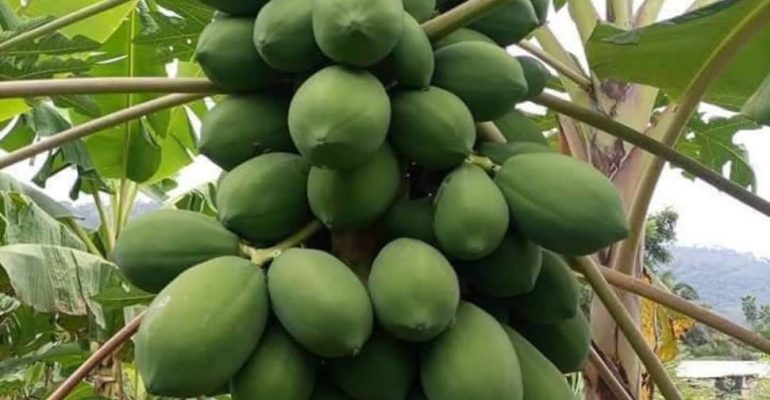
Europe Is Growing Exotic Crops. Now What?
Successful trials of papaya, mango, and banana production in France show that Europe’s agri map is changing. What does this mean for African farmers and exporters, and how can they remain competitive?
Imagine bananas, mangoes, and papayas being successfully grown in Southern France and also delicious too!
For many African farmers and exporters, this may sound surprising. These crops have traditionally been associated with tropical and subtropical regions, including many African countries and Latin American countries. However, successful French experiments show that selected exotic fruits can now be produced in protected and carefully managed growing systems.
In Hérault, near Montpellier, a farm produced its first two tonnes of marketable bananas after several years of experimentation. Papayas and mangoes are also being tested in France, alongside other exotic crops. In Provence, farmers have also been experimenting with new crops as they respond to rising temperatures and changing agri conditions.
This development raises an important question:
If Europe can grow some of Africa’s traditional export crops, what does this mean for African farmers and exporters?
The answer is not necessarily that Europe will stop buying from Africa. It means that competition, market demand, and supply relationships may change.
Growing a Crop Is Not the Same as Competing
A successful experiment proves that a crop can grow under particular conditions. It does not automatically prove that it can be produced at commercial scale or at a competitive cost.
The more important questions are:
- Can the crop be produced consistently?
- How much water and infrastructure does it require?
- What are the labour and production costs?
- Can quality be maintained?
- Can farmers supply supermarkets reliably?
- Can the crop compete with imports?
- During which months will it be available?
African producers still have important advantages. Many have generations of experience growing tropical crops, established production networks, suitable growing conditions, larger potential production areas, and existing export relationships.
However, natural advantage alone is no longer enough. African producers must convert their agri strengths into a complete commercial advantage.
Climate Change Is Changing the Map
Climate change is affecting temperature, rainfall, growing seasons, water availability, pests, diseases, and crop suitability.
Warmer conditions may create opportunities for new crops in some European regions, but they also create serious risks. Higher temperatures can increase water demand, reduce yields, intensify drought, and create new pest pressures. Research on Mediterranean agriculture shows that climate change can affect crop suitability and reduce yields, even where farmers identify opportunities for adaptation (Abd-Elmabod et al., 2020).
Africa is also facing climate pressure. Drought, flooding, heat, soil degradation, changing rainfall, and crop diseases can affect production and export reliability.
African exporters should therefore not assume that Europe becoming warmer automatically benefits Africa. Climate resilience is becoming part of export competitiveness everywhere.
Africa Can Compete Through Complementarity
European production does not necessarily eliminate the need for African supply.
A French or European farmer may supply local markets during part of the year, while African exporters provide products:
- Before the European season.
- After the European season.
- When local production is insufficient.
- When demand exceeds local supply.
- In varieties that Europe cannot easily produce.
- At volumes that local producers cannot yet provide.
African exporters should ask:
When can Europe not produce enough?
This question may be more important than asking whether Europe can grow the crop at all.
Seasonality, scale, origin, variety, processing, and traceability can all help African suppliers remain commercially relevant.
Do Not Compete Only on Price
If European production expands, competing only by offering a cheaper product may become increasingly risky.
African businesses should build a stronger value proposition around:
- Consistent quality.
- Reliable volumes.
- Specific varieties.
- Traceable production.
- Sustainable sourcing.
- Competitive seasonal supply.
- Professional logistics.
- Processing and value addition.
- Strong buyer relationships.
Instead of saying, “We export mangoes,” an exporter could offer mango pulp, dried mango, frozen mango, puree, or a defined variety available during a specific European supply gap.
The question is not only what Africa can grow. It is what Africa can produce, process, document, and deliver better or differently.
From Commodity Supplier to Strategic Partner
African businesses may also become more than product suppliers. They can offer:
- Agronomic knowledge.
- Processing expertise.
- Supply chain experience.
- Research collaboration.
- Investment opportunities.
- Commercial partnerships.
- Market knowledge.
- Sustainable sourcing systems.
The conversation can move from:
“We sell you mangoes.”
to:
“We understand mango production, post-harvest handling, processing, quality, and international markets. How can we create value together?”
That is a stronger position for long-term Africa-Europe trade.
What African Exporters Should Do Now
African exporters should:
- Monitor European crop trials, production seasons, buyer behaviour, and climate developments.
- Identify products and varieties that Africa can produce at scale or with unique quality.
- Focus on European supply gaps and off-season opportunities.
- Invest in processing, packaging, and higher-value products.
- Strengthen water management, soil health, crop diversification, storage, and climate resilience.
- Build evidence of quality, capacity, traceability, sustainability, and delivery performance.
- Develop relationships with European buyers before supply shortages occur.
EAL’s Perspective
At EuroAfri Link, we believe the future of Africa-Europe trade will reward exporters that adapt early.
Our approach helps African businesses:
Prepare for changing markets and buyer requirements.
Prove quality, capacity, compliance, and credibility.
Connect with relevant European buyers and partners.
Manage financing, logistics, documentation, and supply chains.
Grow through repeat and higher value trade.
Partner for long-term commercial relationships.
Successful papaya, mango, and banana experiments in France are not a reason for African farmers to panic. They are a signal that the agricultural map is changing. Africa must compete through quality, timing, resilience, value addition, and trusted partnerships. Europe may be learning to grow some of Africa’s crops. African exporters must learn to compete on more than the fact that they can grow them.
EuroAfri Link: Building trusted trade between Africa and Europe.
– By EuroAfri Link
References
Abd-Elmabod, S. K., Muñoz-Rojas, M., Jordán, A., Anaya-Romero, M., Phillips, J. D., Jones, L., Zhang, Z., Pereira, P., Fleskens, L., van der Ploeg, M., & de la Rosa, D. (2020). Climate change impacts on agricultural suitability and yield reduction in a Mediterranean region. Geoderma, 374, 114453. https://doi.org/10.1016/j.geoderma.2020.114453
Agence de la transition écologique. (2026, May 12). Réglisse, fruit du dragon, figuier de Barbarie: De nouvelles cultures pour s’adapter au changement climatique en PACA. https://infos.ademe.fr/agriculture-alimentation/2026/reglisse-fruit-du-dragon-figuier-de-barbarie-des-nouvelles-cultures-pour-sadapter-au-changement-climatique-en-paca/
FreshPlaza. (2026, January 19). Bananas grown in Hérault department. https://www.freshplaza.com/latin-america/article/9802224/bananas-grown-in-herault-department/