
From Market Access to Meaningful Exchange
From Market Access to Meaningful Exchange
Reflections from the Strathmore University Trade Mission in the Netherlands
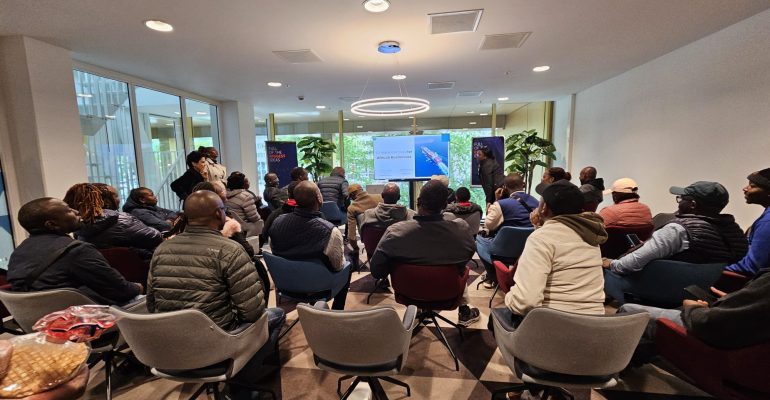
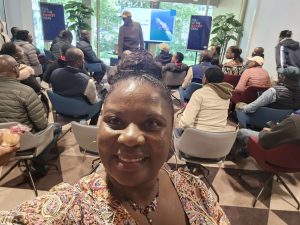
On 19 May 2026, EuroAfri Link had the privilege of facilitating a session on EU Market Access for African Businesses during the agribusiness study mission for Strathmore University Business School (Kenya) in Amsterdam, the Netherlands.
The session brought together students, faculty, and practitioners from across the agribusiness and export ecosystem to explore practical questions around EU market opportunities, compliance, buyer expectations, logistics, financing, and export readiness.
From Questions to Clarity
What stood out most was the level of engagement. Through presentations, group discussions, and interactive exchanges, participants openly shared their export ambitions, challenges, and questions. For many, direct export to the EU was still unfamiliar territory.
As we unpacked topics like certifications, documentation, market entry pathways, and working with EU buyers, uncertainty gradually shifted into a clearer understanding and a set of actionable next steps. This type of experiential learning is known to strengthen export readiness by allowing participants to connect theory with real-world decision-making.
At EuroAfri Link, this is exactly the work at the heart of our mission. Our presentations and advisory work are grounded in practical experience, facilitating agribusiness trade between Africa and Europe. For us, market access is never just about products; it is about systems, standards, relationships, and building the knowledge required to operate confidently across regions.
Why Experiences Like This Matter
Trade missions, study visits, and international learning experiences create value far beyond a single presentation. They expose participants to innovation ecosystems, European business environments, global supply chains, and real-world market dynamics. Research shows that such missions and export promotion activities can significantly increase the likelihood that firms will successfully enter and remain in new markets, especially when they combine information, networks, and follow‑up support.
Equally important, these missions create space for dialogue, peer learning, networking, and new ways of thinking about international business. Participants return not only with information, but with expanded perspectives, new connections, and a more realistic sense of what it takes to export sustainably.
The Netherlands offers a particularly valuable environment for this learning. Its strong links between education, innovation, logistics, agriculture, and international trade provide practical insights for businesses, universities, and institutions seeking to strengthen Europe–Africa collaboration.
Education and Trade Belong Together
One of the key reflections from this mission is that trade and education should not be viewed separately. Preparing businesses and young professionals for international markets requires knowledge, skills, exposure, and intercultural understanding. Universities, trade missions, and ecosystem partners all have a role to play in developing future exporters, business leaders, and cross-border collaborators.
That is why conversations about EU market access should not focus only on technical compliance and buyer requirements. They must also include institutional learning, curriculum development, capacity building, and long-term partnership models between African and European institutions. When experiential learning is embedded into academic programmes, students and professionals are better equipped to translate classroom knowledge into viable export strategies.
From Market Access to Meaningful Exchange
For EuroAfri Link, this mission reaffirmed that our work sits at the intersection of meaningful exchange:
- Exchange of knowledge between universities, businesses, and ecosystem partners
- Exchange of opportunities between African entrepreneurs and European markets
- Exchange of perspectives that shape more inclusive, sustainable, and mutually beneficial trade relationships
Reviewed studies highlight that such multi-stakeholder engagement can deepen university–society linkages, strengthen innovation capacity, and create pathways for more engaged, entrepreneurial graduates. When paired with targeted trade promotion and export-readiness support, these collaborations can turn missions and study visits into long-term partnerships.
Let’s Collaborate
EuroAfri Link is open to collaborating with:
- Universities and business schools
- Technical and vocational institutions
- Trade mission organisers and chambers of commerce
- Export promotion agencies and investment promotion bodies
- Agribusiness associations, cooperatives, and incubators
- Development partners, foundations, and ecosystem builders
Whether you are planning a study visit, a faculty or executive programme, an export training, a market access workshop, or a multi-country trade mission, we would be happy to explore how we can design it with you. Our goal is to help bridge African businesses, institutions, and entrepreneurs to European opportunities through practical market knowledge, export readiness support, and long-term partnerships that benefit all sides.
If your organisation is interested in co-developing Europe–Africa study missions, joint programmes, or institutional partnerships, EuroAfri Link can support you with:
- Tailored EU market access and export readiness sessions
- Programme design that links agribusiness, logistics, innovation, and entrepreneurship
- Connections to relevant European education, research, and industry partners
Interested in exploring a partnership?
Get in touch and let’s discuss what a Europe–Africa learning or trade programme could look like for your institution.
You can explore how EuroAfri Link supports African students and professionals in accessing European learning opportunities and programmes here:
- Study opportunities in Europe for African students and young professionals: https://euroafrilink.com/our-services/study-in-europe-for-african-students/
- Events, missions, and programmes connecting Europe and Africa: https://euroafrilink.com/events-programs/
Further reading
Durmuşoğlu, S. S., Apfelthaler, G., Nayir, D. Z., Alvarez, R., & Mughan, T. (2012). The effect of export promotion programs on export performance: A quasi-experimental study of trade missions and trade shows. Trade and International Marketing Journal, 24(2–3), 190–205. (Access via publisher: https://journals.sagepub.com/doi/10.1177/2340944420901045)
Shamsuddoha, A., Ali, M. Y., & Ndubisi, N. O. (2009). Impact of government export assistance on internationalization of SMEs from developing nations. International Journal of Entrepreneurship and Small Business, 8(4), 495–517. (Related working material accessible via UN digital library: https://digitallibrary.un.org/)
Styles, C., & Ambler, T. (2000). Export performance measures in Australia and the United Kingdom. Journal of International Marketing, 8(3), 1–17. (Access via institutional databases such as JSTOR, EBSCO, or publisher: https://eprints.whiterose.ac.uk/id/eprint/155069/)
You can drop these references at the bottom of the blog under a heading such as “Further reading” so they support the narrative without making the post feel academic-heavy.